
 Image 1 of 1
Dealing with dissociation can be one of the most challenging and frustrating encounters for EMDR therapists; the cursory mention in the basic training is rarely sufficient for working with any meaningful presentation. In particular, complex trauma presentations are almost always characterized by occurrences of dissociation. Most critically, dissociation facilitates the development of insecure attachment, a fragmented sense of personality, and avoidance. This training is designed for the EMDR clinician who wants to become adept and confident in working with dissociation - both as a clinical symptom and as the facilitator for the chronic patterns seen in complex trauma.
Participants who successfully complete the training should then be able to:
Define dissociation focusing both on a description and explanation of dissociation.
Recognize the varying presentations of dissociation and develop an integrated case conceptualization, utilizing a parts-based approach from Knipe (2018)
Use resources during phase 2 to prepare the client for work with dissociation
Employ reprocessing strategies to work with dissociation as it emerges in phase 4
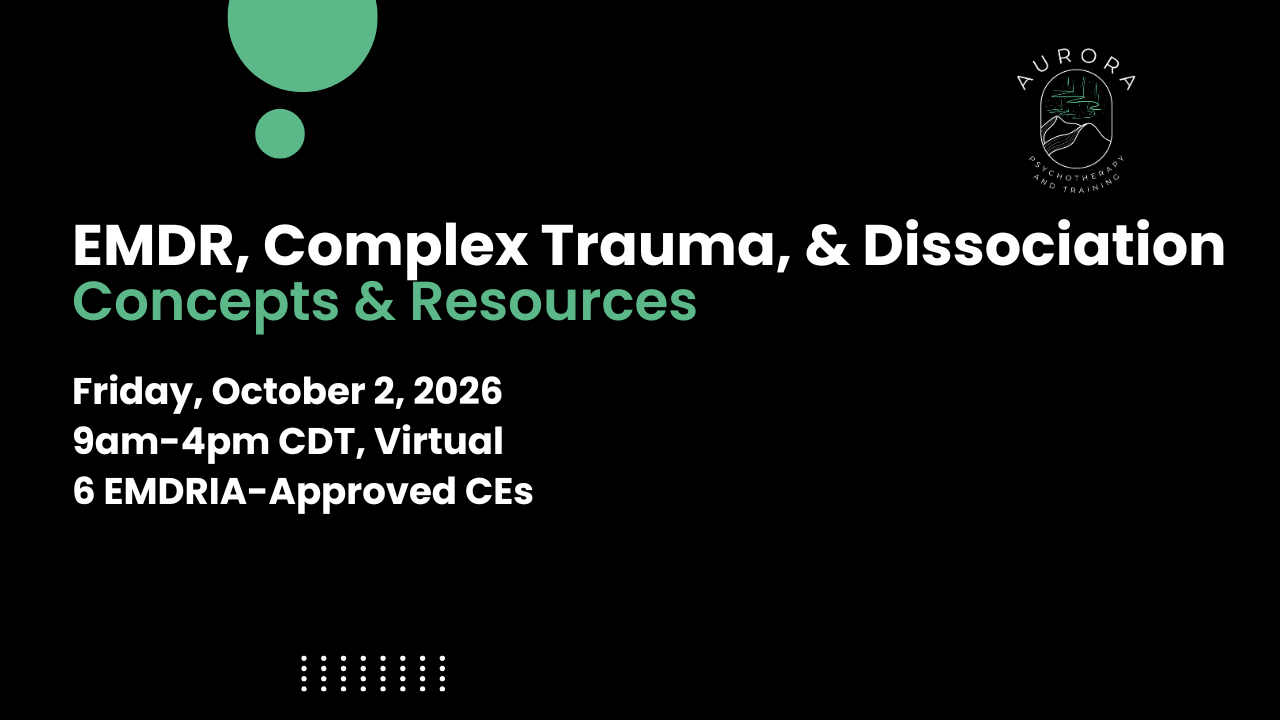
Date: Friday, October 2, 2026
Time: 9am-4pm CDT
Format: Virtual
6 EMDRIA CE’s
EC Program Approval Number: #23008-12
Dealing with dissociation can be one of the most challenging and frustrating encounters for EMDR therapists; the cursory mention in the basic training is rarely sufficient for working with any meaningful presentation. In particular, complex trauma presentations are almost always characterized by occurrences of dissociation. Most critically, dissociation facilitates the development of insecure attachment, a fragmented sense of personality, and avoidance. This training is designed for the EMDR clinician who wants to become adept and confident in working with dissociation - both as a clinical symptom and as the facilitator for the chronic patterns seen in complex trauma.
Participants who successfully complete the training should then be able to:
Define dissociation focusing both on a description and explanation of dissociation.
Recognize the varying presentations of dissociation and develop an integrated case conceptualization, utilizing a parts-based approach from Knipe (2018)
Use resources during phase 2 to prepare the client for work with dissociation
Employ reprocessing strategies to work with dissociation as it emerges in phase 4
Date: Friday, October 2, 2026
Time: 9am-4pm CDT
Format: Virtual
6 EMDRIA CE’s
EC Program Approval Number: #23008-12