
 Image 1 of 1
Dysfunctional Positive Affect (DPA) is an underrecognized component in the maintenance of avoidant behavior, addiction, and procrastination. Attention is rarely given to the positive emotions - such as relief or enjoyment - that play a critical role in motivating these behaviors. We also know this positive role plays a key role in the instilling of shame, which can lead to further engagement in avoidance. The cycle can be frustrating, both for clients and clinicians. However, we have tools to directly address these dysfunctionally stored emotions.
Participants who successfully complete the training should then be able to:
Define dysfunctional positive affect (DPA) as a concept - focusing on its role as a maintenance structure
Describe how to address DPA as an element of reprocessing or as its own discreet target
Demonstrate how to use BLS to identify, target, and reprocess DPA
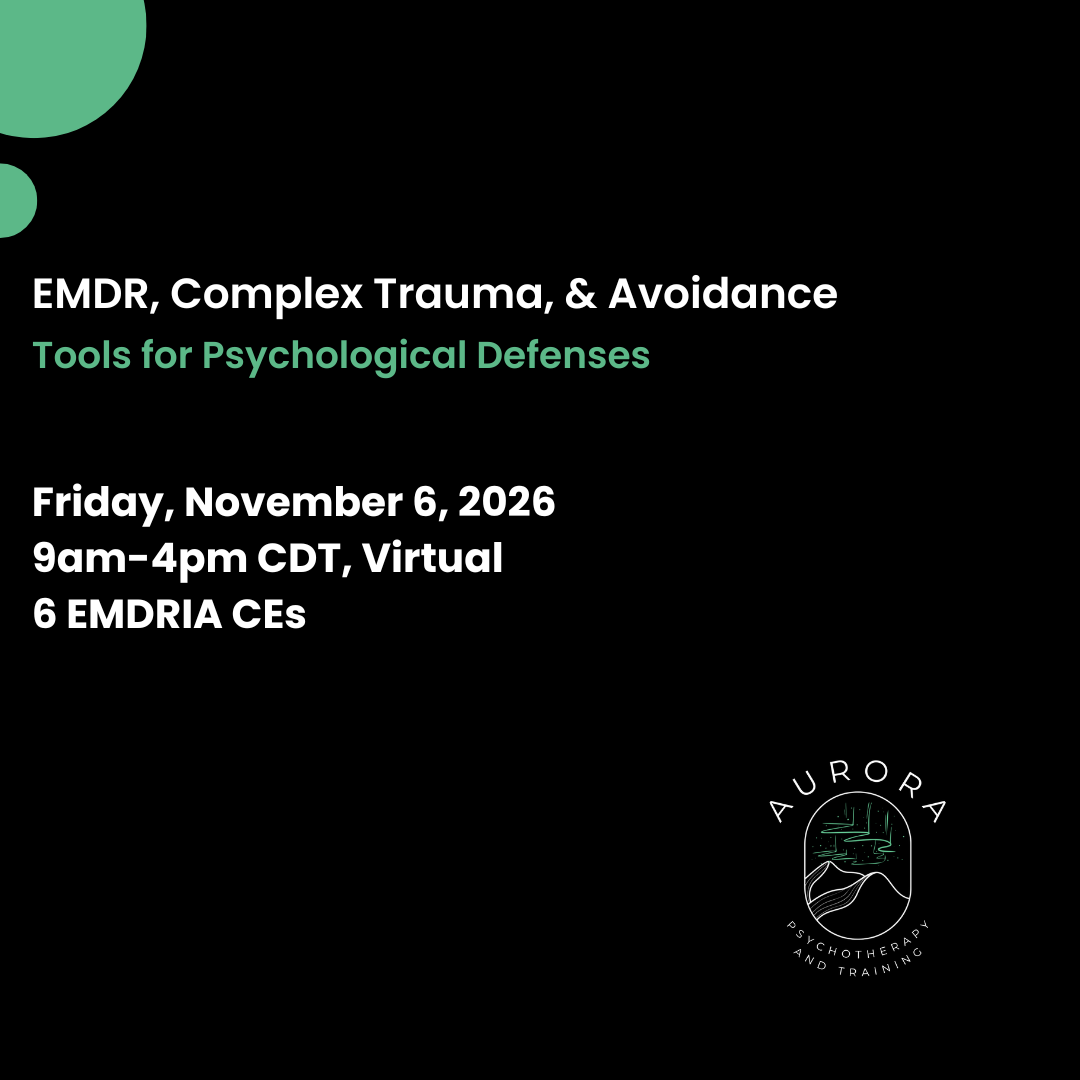
Date: November 6, 2026; 9am-4pm CDT
Time: 9am-4pm CDT
Format: Virtual
6 EMDRIA CEs
EC Program Approval Number: #23008-11
Dysfunctional Positive Affect (DPA) is an underrecognized component in the maintenance of avoidant behavior, addiction, and procrastination. Attention is rarely given to the positive emotions - such as relief or enjoyment - that play a critical role in motivating these behaviors. We also know this positive role plays a key role in the instilling of shame, which can lead to further engagement in avoidance. The cycle can be frustrating, both for clients and clinicians. However, we have tools to directly address these dysfunctionally stored emotions.
Participants who successfully complete the training should then be able to:
Define dysfunctional positive affect (DPA) as a concept - focusing on its role as a maintenance structure
Describe how to address DPA as an element of reprocessing or as its own discreet target
Demonstrate how to use BLS to identify, target, and reprocess DPA
Date: November 6, 2026; 9am-4pm CDT
Time: 9am-4pm CDT
Format: Virtual
6 EMDRIA CEs
EC Program Approval Number: #23008-11