
 Image 1 of 2
 Image 2 of 2
If you have ever heard any of these phrases while doing EMDR, you likely have encountered avoidance, in the case fueled by dysfunctional positive affect:
“Ugh, I don’t even want to look at my younger self’
“I can see the image of the memory, and I know it’s upsetting, but I don’t feel anything”
“My parents did the best they could, they came from far worse and didn’t know what they were doing. It’s OK”
One of the features sustaining complex trauma is the activation of dysfunctional positive affect, or the relief we experience when we prevent or contain a trauma activation. Specifically, this positive affect can enable and fuel the psychological defenses we are using, even if those defenses are also a detriment to us. The processes of avoidance, defense shame, and idealization are all manifestations of this positive affect. Working with there occurrences can be confounding to even the most seasoned EDMR clinician; however, we have tools to directly address these dysfunctionaly stored emotions.
Participants who successfully complete the training should then be able to:
Define dysfunctional positive affect (DPA) as a concept - focusing on its role as a maintenance structure
Target the manifestation of DPA and the avoidant defenses they perpetuate
Integrate avoidance into your case conceptualization to better identify and target
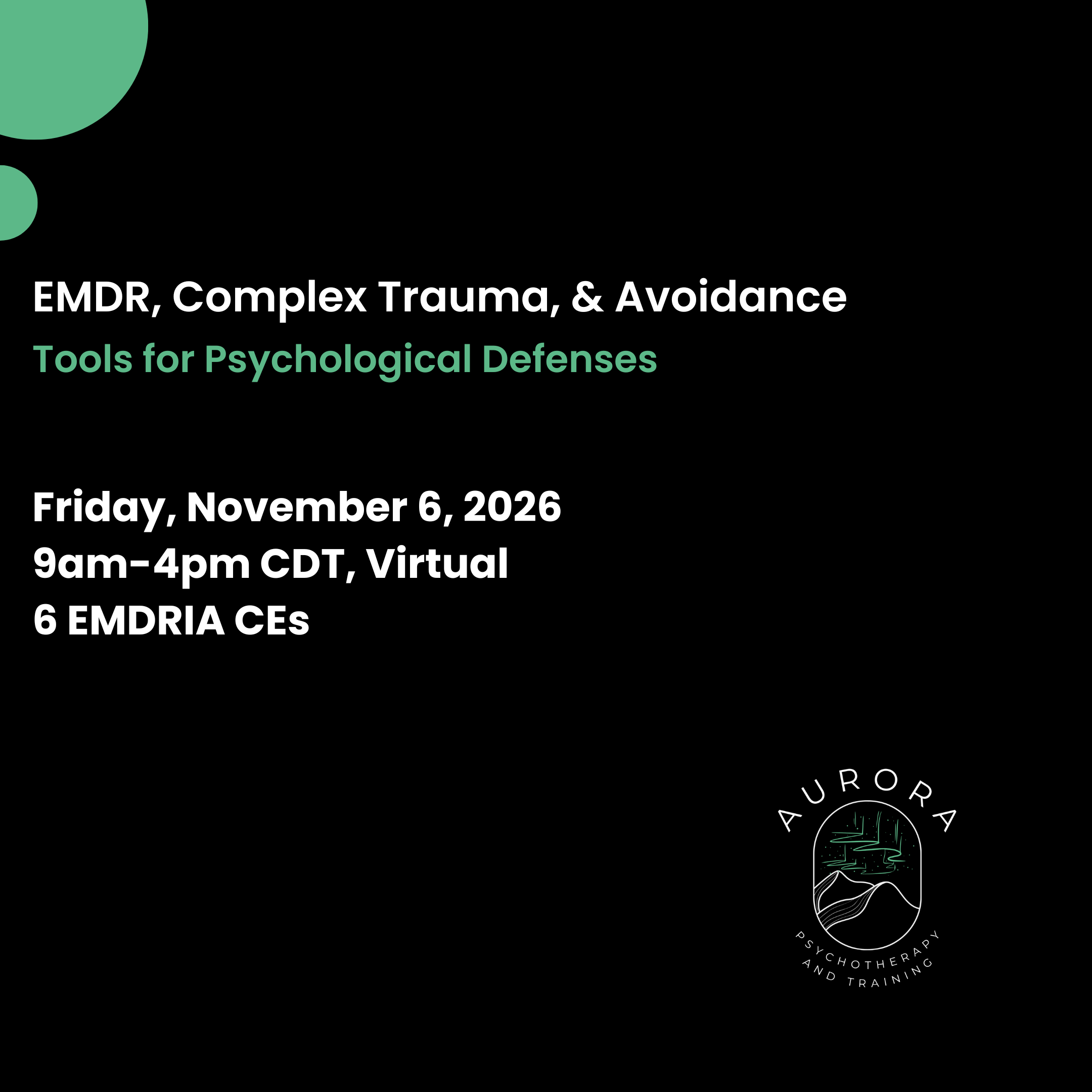
Date: Friday, November 6, 2026
Time: 9am-4pm CDT
Format: Virtual
If you have ever heard any of these phrases while doing EMDR, you likely have encountered avoidance, in the case fueled by dysfunctional positive affect:
“Ugh, I don’t even want to look at my younger self’
“I can see the image of the memory, and I know it’s upsetting, but I don’t feel anything”
“My parents did the best they could, they came from far worse and didn’t know what they were doing. It’s OK”
One of the features sustaining complex trauma is the activation of dysfunctional positive affect, or the relief we experience when we prevent or contain a trauma activation. Specifically, this positive affect can enable and fuel the psychological defenses we are using, even if those defenses are also a detriment to us. The processes of avoidance, defense shame, and idealization are all manifestations of this positive affect. Working with there occurrences can be confounding to even the most seasoned EDMR clinician; however, we have tools to directly address these dysfunctionaly stored emotions.
Participants who successfully complete the training should then be able to:
Define dysfunctional positive affect (DPA) as a concept - focusing on its role as a maintenance structure
Target the manifestation of DPA and the avoidant defenses they perpetuate
Integrate avoidance into your case conceptualization to better identify and target
Date: Friday, November 6, 2026
Time: 9am-4pm CDT
Format: Virtual